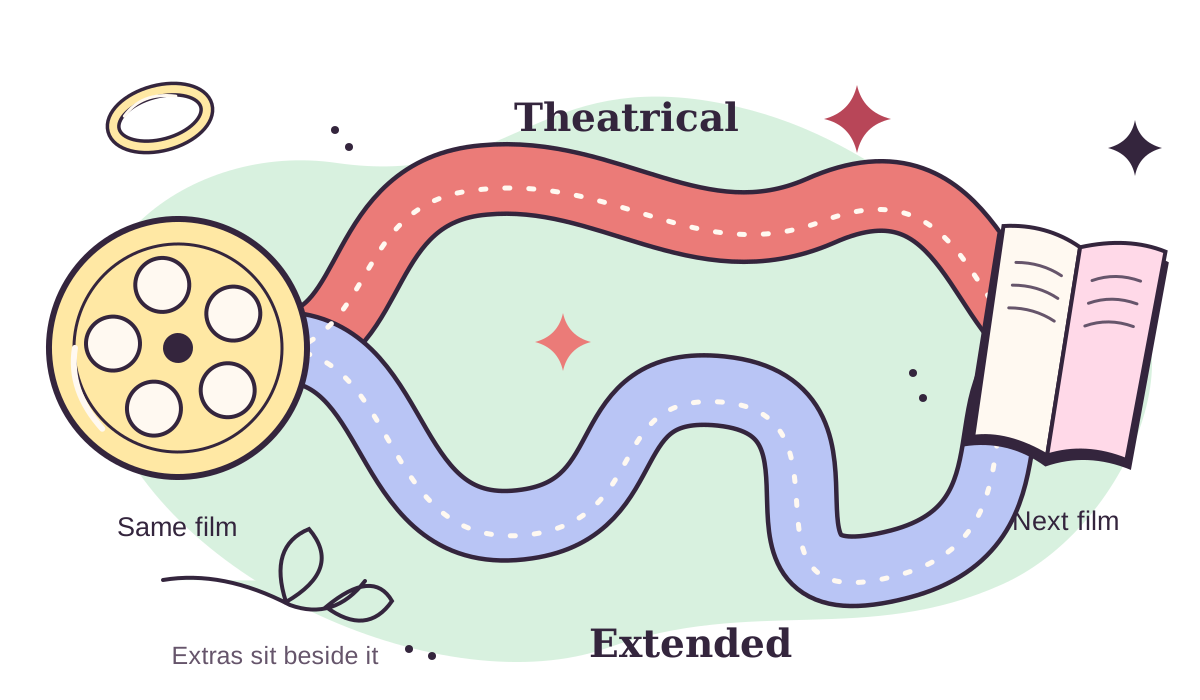
Theatrical and extended are alternate cuts of the same Lord of the Rings film. You choose one version for that viewing; the extended edition is not a new chapter to play after the theatrical edition. For a first watch, my practical recommendation is theatrical if the time commitment worries you, or extended if a longer visit is already part of the attraction.
That is a preference, rather than a ranking of fans. A friend’s favourite cut may fit their tenth visit better than your first evening. The useful decision has three parts: which film, which cut and which release contains it. This guide stays clear of specific added scenes and plot resolutions, so you can choose without learning the story first.
One film, two versions of the visit
A concrete US example is Warner’s trilogy set listed by Target as TCIN 81478579. Its description names The Fellowship of the Ring, The Two Towers and The Return of the King, each in theatrical and extended editions. The six version choices do not turn that trilogy into six successive films.
Think of the illustration as a fork and a reunion: one film branches into two viewing choices, then the route continues to the next film. A later revisit can take the other branch. You do not have to complete both branches before moving forward.
If your question is which film comes next, use the Lord of the Rings hub. Here, we are choosing a presentation of a film already on your list. Keeping those decisions separate makes a large franchise feel less like a stack of assignments.
An extended cut can be shown in a theater
“Theatrical edition” names a cut; “playing theatrically” describes an exhibition setting. They are not interchangeable clues. In a 14 May 2024 announcement, Fathom and Warner Bros. explicitly identified their US cinema presentations of the trilogy as remastered extended editions.
That dated example does not establish any present-day screening schedule. It does establish why a theater ticket or a big-screen poster is not enough to identify the cut. Read the event description. For a group outing, share the edition label alongside the film title so that everyone is planning for the same presentation.
4K answers a different question
The same US set describes both cuts as 4K. So a 4K label cannot, by itself, tell you whether the film is theatrical or extended. The format and the cut are separate pieces of information. A more elaborate format badge does not settle the story-version question.
My checking order is film title → edition label → included feature → format and access requirements. For a physical release, inspect that product’s actual contents. For a digital listing, inspect the specific feature page. Do not assume a second cut is included because another package with similar artwork contains both.
Bonus features are another branch again
A longer feature and a collection of supplements are different things. Warner’s 2022 Fellowship product announcement, for example, separately describes access to the extended film and to special features. That is evidence about that product, not a guarantee that every extended-edition release includes the same extras.
Before choosing a package, write down what you actually want: the extended film, production documentaries, commentaries, or some combination. Look for those items by name. “More content” does not tell you whether the material plays inside the feature or sits beside it. You can enjoy one without wanting to watch all the other material immediately.
Plan an evening, not a universal minutes-added calculation
For scheduling, use the runtime stated for the exact feature you selected and leave room for breaks. For a comparison, first check what each number measures: the feature with credits, a presentation with additional material, or an entire package. If the listing does not explain its accounting, subtracting two totals will not reliably tell you how many extra story minutes there are.
A more useful first-watch question is whether you have enough attention for the version in front of you. You can plan separate film nights or pause at a convenient point. Choosing the shorter cut is not a promise to revisit; choosing the longer cut is not a promise to watch without a break.
Choose the evening you actually want
Open the statement closest to your situation. These are my editorial recommendations, not scores or a claim about a filmmaker’s preferred cut.
I am curious, but the commitment feels intimidating.
Try the theatrical edition of Fellowship. Make one film your first commitment. Afterward, decide whether to continue, revisit or stop. You do not need to select an edition policy for the whole trilogy before discovering whether the first film interests you.
I already enjoy long fantasy films and want an extended visit.
Choose the extended edition, confirm the feature label and plan enough time for that release. Avoid reading a list of added scenes first: its explanations can reveal more of the story than you wanted to know.
I am hosting people with different levels of interest.
Agree on the cut and a stopping plan beforehand. Ask about time and comfort, rather than asking who is a “real fan.” A shared preference you can all enjoy is more useful than winning an edition argument before the film begins.
On a return visit, compare what the time does
If you later watch the other cut, ask a focused question: does a passage change how you understand a relationship, the space between major events, or the feeling of forward movement? Describe its effect before deciding whether the additional time helps your experience. More duration and more enjoyment are related questions, not the same measurement.
You can keep that comparison small. One passage is enough for a useful conversation; a scene inventory can wait. Return to the Middle-earth routes for the next film or the books. For a broader method of choosing what to watch next, try our watch-order decision guide.