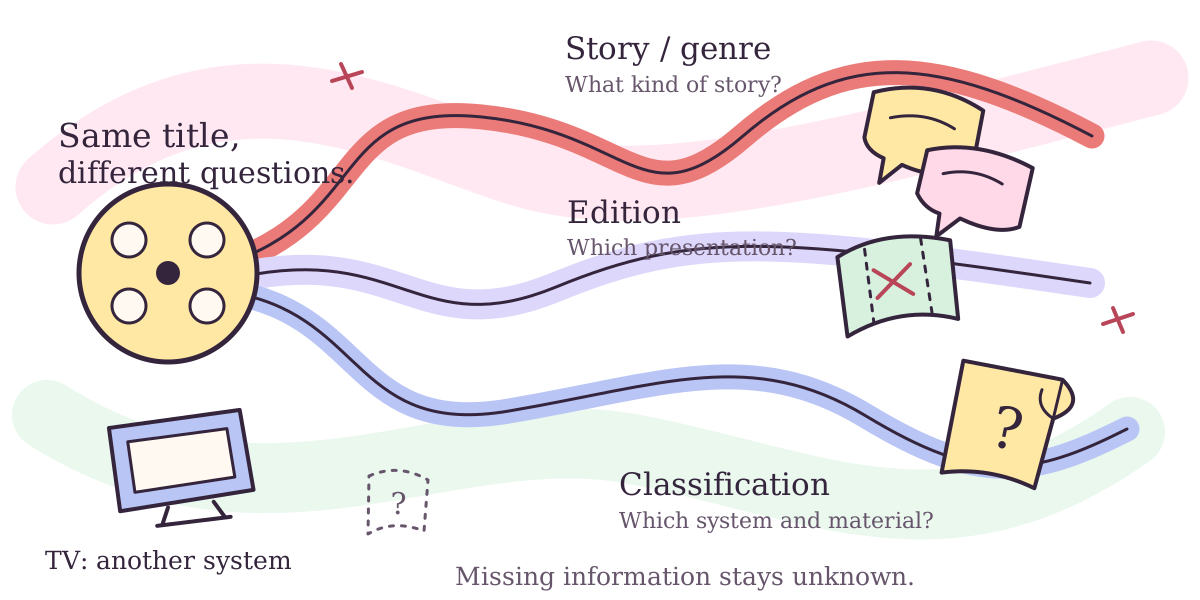
R is a category in the US MPA film-rating system. An unrated version does not carry a CARA rating; it is not another category above R. TV-MA belongs to the separate TV Parental Guidelines system. Before comparing labels, identify which system and which version or piece of material each one describes.
This guide reads descriptions rather than assigning ratings. A familiar letter cannot explain everything about an edition, and an absent badge cannot explain why information is missing. The examples below are invented for practice; no real film, certification or offer is being presented.
Genre, edition and rating answer different questions
A genre label describes a kind of story. An edition label identifies a presentation or cut. A classification identifies content within a particular rating system. “Horror,” “extended edition” and “R-rated” therefore do different jobs, even when a listing places them together.
The MPA’s FAQ distinguishes the rating category from the film-specific descriptor explaining what contributed to it. It also states that ratings do not judge a film’s quality. Read the descriptor beside the letter; neither a higher category nor an unrated label is a recommendation or a review score.
Keep the rating attached to its material
CARA identifies its role as rating motion pictures for the US. The MPA’s R definition describes adult material and calls for a parent or adult guardian to accompany viewers younger than 17. That is the category’s definition within this system, rather than a conversion to a television label.
The MPA’s August 2025 rules distinguish a rated version from a different version distributed without a CARA rating. They also distinguish a rated feature from unrated interviews, deleted scenes and other supplements. An unrated label alone cannot tell you precisely what changed, whether the version is longer or how its content compares with the rated version.
TV-MA is another system, not a translated R
The official TV guide describes TV-MA as intended for adult viewers, with possible content descriptors. The Monitoring Board’s ratings page explains that ratings apply by episode and may differ with the version aired. Keep the episode and presentation identifiable rather than treating a series label as an answer about every installment.
Canadian readers need the classification context too. Consumer Protection BC explicitly notes that similar provincial category names can have different definitions. Its 14A and 18A labels belong to that provincial system; this guide does not translate them into US categories.
Try five descriptions. Find the unanswered question.
Read each imagined description, then open the note. The aim is to identify what the wording establishes without filling its gaps with an assumption.
Imagine a listing says: horror, extended edition, unrated.
Does that establish a stronger version than R?
No. It combines a genre, an edition label and an unrated status. Identify the exact version and its content information before comparing it. The MPA’s alternate-version distinction does not turn unrated into a stronger category or disclose every change.
Imagine packaging identifies an R-rated feature and separately identifies unrated interviews.
Has the feature itself become unrated?
That description keeps the feature and extras separate. The MPA’s home-release provisions distinguish those objects too. Ask which material you are opening, rather than spreading one label across everything in the package.
Imagine an episode listing displays TV-MA.
Can I replace that with R in my notes?
Keep TV-MA and the television system attached to the episode. The TV Guidelines definition does not establish an MPA equivalent. Read the associated content information and identify the particular episode or version.
Imagine a US discussion and a British Columbia listing use different labels for a familiar title.
Does the difference prove somebody made a mistake?
No. Check the classifying body and version first. BC’s own explanation identifies its provincial categories and cautions that definitions can vary. Similar words or ages are not evidence of a direct conversion.
Imagine a catalogue page displays no rating at all.
Does missing information confirm an unrated release?
Leave it unknown. A blank field does not identify a verified status, a different cut or a reason for the omission. Look for the exact work and version in the relevant official record; do not replace missing information with a content judgment.
Carry the useful detail into your next choice
A compact note can keep the work, edition, classification system, category or status, descriptor and covered material together. An unresolved field can remain a question. This is a way to read a listing, not a guarantee of anyone’s reaction to its content.
For edition choices, continue to our theatrical-versus-extended guide. For the kind of tension you want, visit the Horror hub. Keep those choices distinct from the classification attached to the actual version.